Visibility and Food Choice in Home Settings Research
February 2026
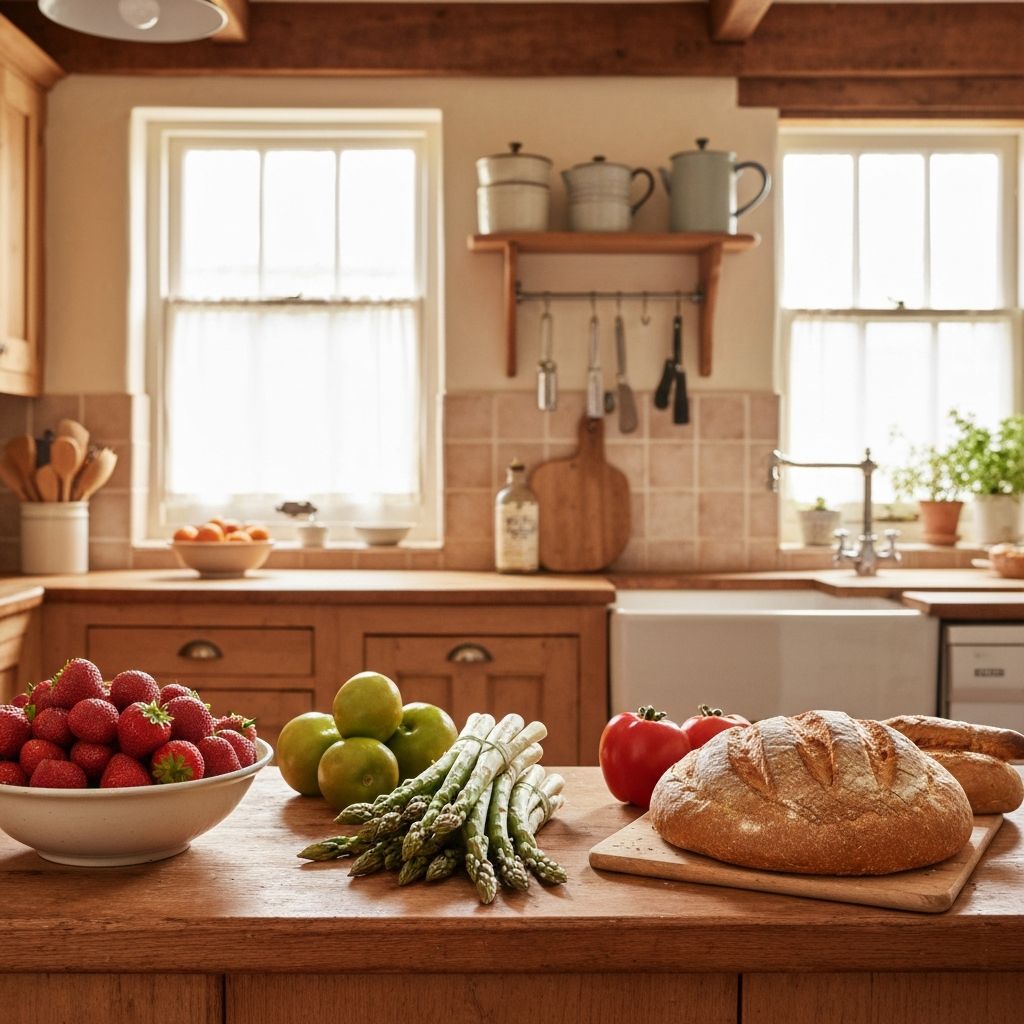
Understanding Food Visibility in Household Research
One of the most frequently examined concepts in household food environment research is the visibility of foods within the home. Visibility refers to how easily and prominently foods are visible, noticeable, or salient to household members. Research suggests that foods that are visible, accessible at eye level, or stored in transparent containers are more frequently encountered and consumed than foods stored in less visible locations.
What Does Research Tell Us?
Observational studies of household kitchens have documented the placement of foods in relation to consumption. Foods on open shelves, in fruit bowls on counters, or in the front of refrigerators tend to be more visible than items stored at the back of cupboards or in upper or lower storage spaces. This simple difference in placement has been correlated with intake patterns in household studies.
Visibility can be thought of as a form of environmental cue. In behavioural psychology, a cue is a signal or stimulus that prompts a response. Visual cues in the food environment—seeing food, being able to see what foods are available—may trigger eating behaviour. When foods are visible and easily noticeable, they function as more prominent cues in the environment.
The Proximity Effect
Closely related to visibility is proximity: how close or far away foods are located. Research has examined whether foods that are physically closer and more accessible are consumed more frequently. For example, fruits and vegetables stored in a drawer at the front of the refrigerator may be more likely to be consumed than those in a back drawer or in a crisper drawer behind other items.
The proximity effect has been observed in both naturalistic settings (homes) and experimental settings (cafeteria studies, test meals). The closer a food is to a person's immediate space, the more likely it is to be encountered and consumed.
Implications from Household Studies
UK and international household surveys have documented these visibility and proximity patterns. When researchers visit homes and catalogue what foods are visible and where they are stored, they often find correlations between placement and dietary composition. For example, in homes where fruits are visible on the counter, fruit consumption tends to be higher in that household's diet than in homes where fruits are not on display.
Similarly, foods that are visible and accessible in the kitchen are represented differently in household dietary intake data than foods stored less prominently. This is documented in both cross-sectional studies (comparing different households at one time point) and longitudinal studies (observing changes over time).
Why Is Visibility Important for Understanding Eating?
Understanding visibility effects is important because it helps explain one pathway through which the physical environment influences eating behaviour. Rather than eating being purely driven by conscious decisions about what to eat, environmental factors like visibility play a role in shaping what people consume.
This is relevant to understanding dietary patterns across populations. Different households have different food environments, and some of that variation relates to what foods are visible and accessible. Recognising this helps contextualise dietary diversity and eating patterns without necessarily implying causal mechanisms.
Important Caveats
It is important to note that research on visibility effects documents associations, not necessarily direct causal mechanisms. Individual responses to visible foods vary considerably. Some people are more responsive to visual cues, while others are less so. Additionally, visibility is just one factor among many that influence eating behaviour. Hunger, preferences, cultural practices, cost, and many other factors also play roles.
Furthermore, the presence of a visible food does not guarantee consumption—context, preference, and other individual factors still matter greatly. The relationship between visibility and intake is correlational; manipulating visibility may not produce the expected changes in consumption for all individuals or in all contexts.
Visibility in a Broader Context
Food visibility in the home is one concept within a broader literature on food environments. It is studied alongside accessibility (how easy it is to reach and consume a food), storage methods, household composition, social norms, and many other factors. Understanding visibility helps provide a more complete picture of how home environments relate to eating patterns, but it is not a complete explanation in itself.
Researchers continue to examine visibility effects and other environmental factors to better understand the complex relationships between the physical and social environment of the home and eating behaviours. This research contributes to our understanding of nutritional epidemiology and behavioural influences on diet without necessarily implying directives for individual households.